Dangerous TikTok Dental Trends Dentists Warn You to Avoid
Just like small daily habits can transform your life, consistent dental habits can create a lifetime of confident, healthy smiles. Learn more in The Habit Method.
The rise of short-form social media platforms like TikTok has connected millions worldwide, but it’s also opened the door to viral dental hacks that can permanently damage your teeth. From DIY whitening to home “fixes” for alignment, dentists are sounding the alarm about how these trends put oral health at serious risk. This evidence-based guide breaks down the most dangerous TikTok dental trends, why they’re harmful, and what safer, professional alternatives you should trust instead.
Why TikTok Dental Trends Are Going Viral
It’s no secret that TikTok’s engaging, 60-second videos have become a go-to source for beauty, wellness, and lifestyle advice. But what happens when this advice crosses into medical and dental territory? Part of what makes these videos so viral is their visual simplicity—someone seems to “fix” their teeth instantly, prompting millions of viewers to try it themselves without understanding the real risks.
- The influence of social media challenges: Young audiences are especially drawn to visual transformations and “life hacks” that promise quick, inexpensive results. Unfortunately, when applied to dentistry, these shortcuts often lack scientific foundation.
- How misinformation spreads through short-form content: Algorithms reward viral engagement, not accuracy. Once a “hack” gains traction, it’s quickly replicated without professional oversight, spreading misinformation faster than expert corrections can keep up.
— American Academy of Cosmetic Dentistry, 2024
Popular TikTok Dental Hacks That Endanger Your Oral Health
Teeth Filing Trend: Permanent Damage to Enamel
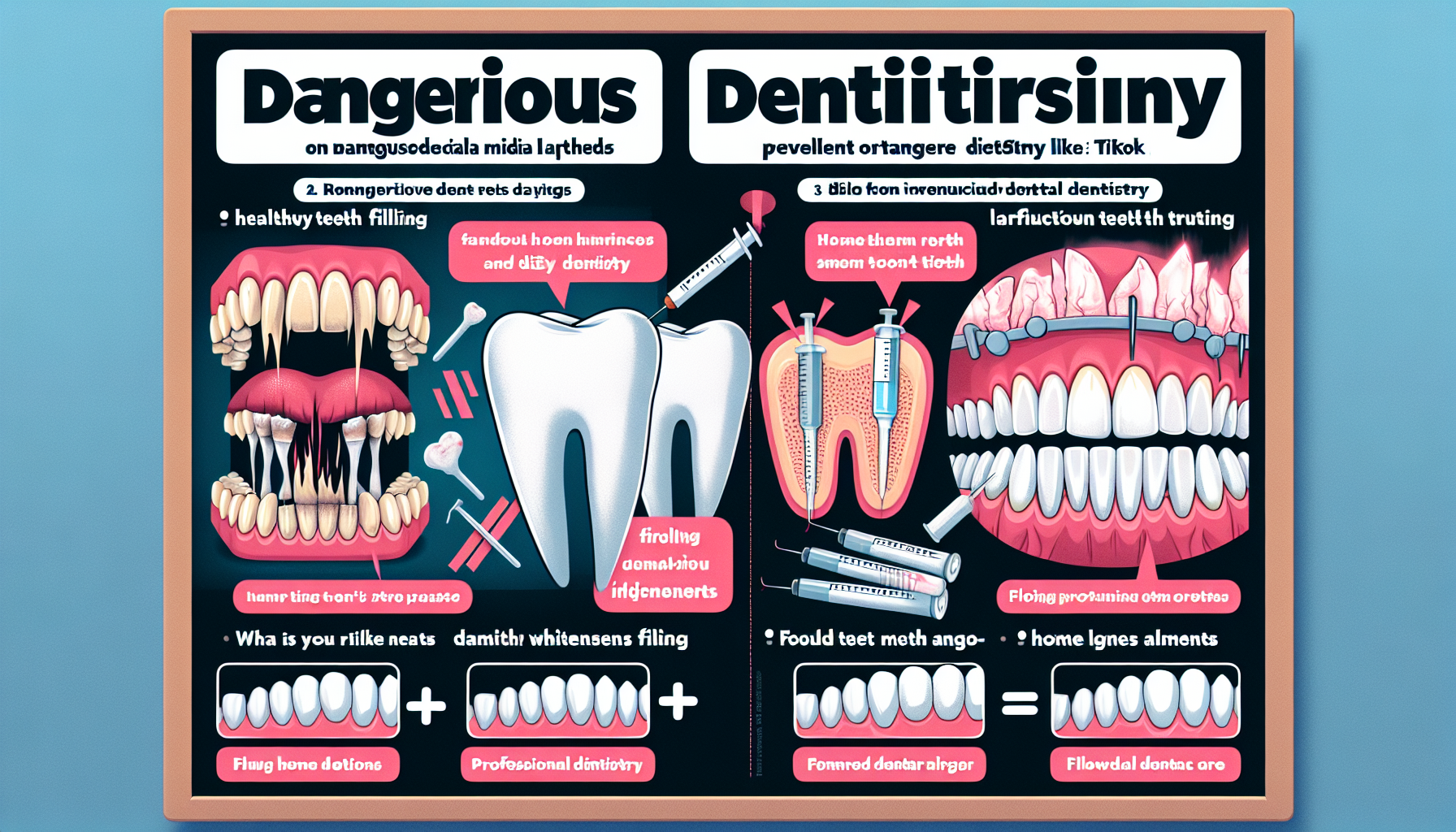
One of the most alarming fads known as the teeth filing TikTok trend involves people using nail files or sandpaper to “even out” or reshape their teeth. The motivation is often cosmetic, but the consequences are devastating. Enamel—the hard, protective outer layer of your teeth—doesn’t grow back. Filing it away exposes the softer dentin underneath, leading to severe sensitivity, discoloration, and structural weakness.
Dentists warn that even a few seconds of filing removes a permanent layer of protection. Once the enamel is gone, the only remedies involve dental bonding, veneers, or crowns—treatments that can be costly and invasive.
— Journal of Dental Research, 2022
DIY Teeth Whitening with Unsafe Ingredients
Another dangerous trend involves using household products or unverified powders to whiten teeth. Some popular TikTok videos promote brushing with activated charcoal, hydrogen peroxide, or even lemon juice and baking soda. While these may temporarily brighten the surface, they cause microscopic erosion of enamel and disrupt your mouth’s pH balance.
- Charcoal products are highly abrasive and can wear down enamel, making teeth more prone to staining over time.
- Hydrogen peroxide solutions sold for cosmetic use are far less concentrated than the ones viral videos suggest. Overuse leads to chemical burns or nerve irritation.
- Homemade mixtures with acidic ingredients like lemon juice can cause rapid enamel loss and tooth sensitivity.
Professional whitening systems, on the other hand, are scientifically formulated to deliver safe, predictable results. Dentists use custom trays and gels that balance concentration and exposure time, ensuring the gums and enamel stay protected.
— American Dental Association, 2023
At-Home Teeth Straightening Experiments
Perhaps one of the most dangerous TikTok dental hacks involves attempting to straighten teeth using rubber bands, paper clips, or cheap mail-order aligners. These approaches bypass the precise diagnostics that orthodontists rely on, such as x-rays and digital imaging. The result? Teeth may shift unevenly, creating bite problems, jaw pain, and gum trauma.
Improper tooth movement can also compromise blood supply or root integrity, leading to tooth loss. Even mail-order orthodontics that don’t include personal oversight increase the risk of misalignment, infection, and bone loss.
— American Association of Orthodontists, 2022
Long-Term Consequences of Unsafe Dental Trends
The viral nature of these hacks disguises their potential for long-term damage. Many people don’t realize the permanent consequences until it’s too late. Potential outcomes include:
- Tooth decay and sensitivity: Once enamel is worn away, teeth become more susceptible to cavities and pain.
- Gum damage and recession: Chemical burns or mechanical trauma can expose roots, leading to tenderness and bleeding.
- Enamel erosion: Irreversible loss of the tooth’s surface structure weakens teeth and affects appearance.
- Misaligned bites: DIY orthodontic attempts often shift teeth unevenly, resulting in jaw strain and temporomandibular joint (TMJ) issues.
If you’ve tried a DIY dental hack and notice sensitivity, pain, or changes in tooth shape, see your dentist immediately. Early intervention can minimize further damage and prevent complications.
Safer Alternatives to Viral Dental Hacks
Instead of risking your oral health with unverified tricks, rely on safe alternatives to TikTok dental hacks that are professionally backed and proven to work.
- For whitening: Try in-office laser whitening, custom take-home kits, or over-the-counter ADA-approved strips. These options control exposure and protect the enamel.
- For composite shaping: Dentists can use micro-polishing or bonding techniques to even out edges without damaging enamel.
- For straightening: Clear aligners prescribed by licensed orthodontists ensure safe, gradual tooth movement monitored by professionals.
Proven results take time, but your smile will look natural, healthy, and strong for years to come.
— British Dental Journal, 2024
How to Protect Your Smile from Harmful Social Media Fads
Protecting your teeth in the social media age requires a critical eye and trusted information sources. Here are a few dentist-approved strategies to avoid falling for dangerous dental hacks:
- Verify advice with credible sources: Check if the video references dental organizations or peer-reviewed studies before acting on it.
- Consult professionals: Even if something seems harmless, confirm with your dentist before trying it at home.
- Encourage digital literacy: Teach teens and young adults to approach online wellness content skeptically, especially when it involves permanent changes.
- Prioritize preventive care: Maintain regular checkups twice a year to catch small issues before they escalate.
— Centers for Disease Control and Prevention (CDC), 2023
Final Thoughts: Trusting Professionals Over Viral Trends
In our pursuit of beauty and self-improvement, it’s easy to be tempted by quick fixes and internet fads. But just as true health is built through mindful habits, a bright smile comes from consistent, evidence-based care. Dentist warnings about social media dental trends serve as a reminder that professional oversight isn’t optional—it’s essential.
When in doubt, ask your dentist. Your oral health is a lifelong investment, and no viral post should ever come at the expense of your teeth. Stay informed, stay proactive, and rely on experts who understand how to keep your smile safe for decades to come.
Continue building healthy habits for lasting wellness—explore The Habit Method today.
Frequently Asked Questions
- 1. Are all TikTok dental trends unsafe? No, some advice—like brushing twice daily or using fluoride toothpaste—is sound. However, any trend recommending physical or chemical alteration to teeth without professional guidance can be dangerous.
- 2. What should I do if I’ve filed my teeth or used an unsafe whitening product? See a dentist immediately. They can assess enamel loss and recommend treatments such as bonding or remineralizing therapy to restore protection.
- 3. Can DIY whitening damage gums as well as teeth? Yes. Overly acidic or oxidizing agents can burn gum tissue, cause inflammation, and lead to lasting sensitivity.
- 4. Why can’t enamel grow back once it’s gone? Enamel is not a living tissue, so it can’t regenerate. Once it’s eroded, only restorative materials can mimic its function and appearance.
- 5. How can I safely improve the appearance of my teeth? Schedule a consultation with your dentist. Professional whitening, bonding, orthodontics, and veneers are all safe, customized options for enhancing your smile.
When it comes to your health, it’s always wiser to trust licensed professionals than online influencers. Your smile deserves real care—not risky trends.
Post Disclaimer
DentalUp is for educational purposes only and cannot accept personal dental information such as x-rays, photos, or treatment details. See full disclaimer here.